The Tairāwhiti Emergency Management Office (TEMO) leads the coordination for emergency responses when activated. The region is exposed to multiple hazards, including earthquakes, tsunami, severe weather, and pandemics, to name a few.
TEMO work streams cover what is often referred to as the four Rs of emergency management – Reduction, Readiness, Response and Recovery. In Tairāwhiti, we also include what is perhaps the most import R - Relationships. As part of the Tairāwhiti Civil Defence and Emergency Management Group, TEMO leads the coordination of emergency response when activated. This involves a large number of regional stakeholders and agencies and also connects into the national emergency management system that includes Central Government agencies.
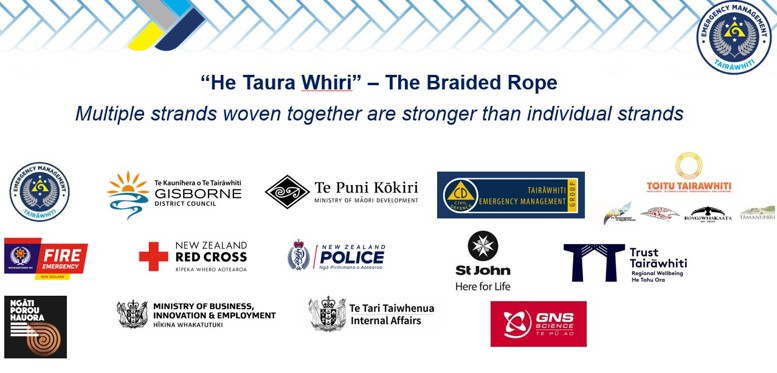
TEMO is the CDEM Group Office which is the operational arm of the Tairāwhiti CDEM Group - a small, professional team that implements the Group’s strategy by:
- Developing and updating the CDEM Group Plan
- Coordinating training, exercises, and community Civil Defence groups' readiness
- Managing emergency responses (from the ECC) during activations
- Building partnerships with emergency services, stakeholders, iwi, lifelines (infrastructure) groups, and NEMA
- Delivering public warnings, risk assessments, and recovery support
Led by the Group Manager, it turns policy into action, ensuring the region is agile, connected, and disaster-ready.
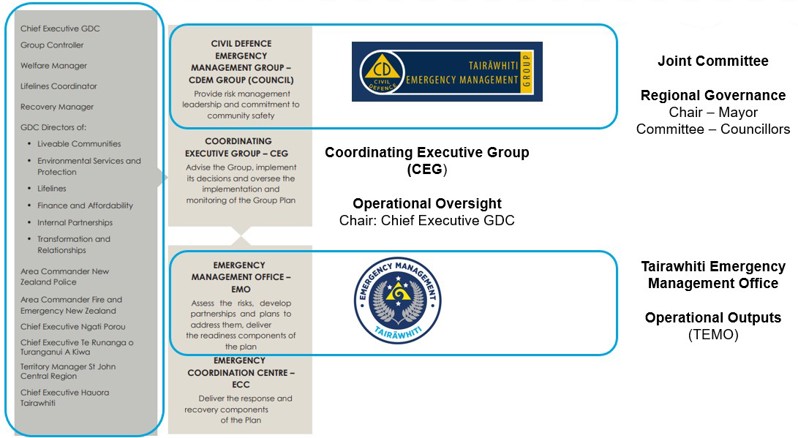
Tairāwhiti CDEM Group Structure
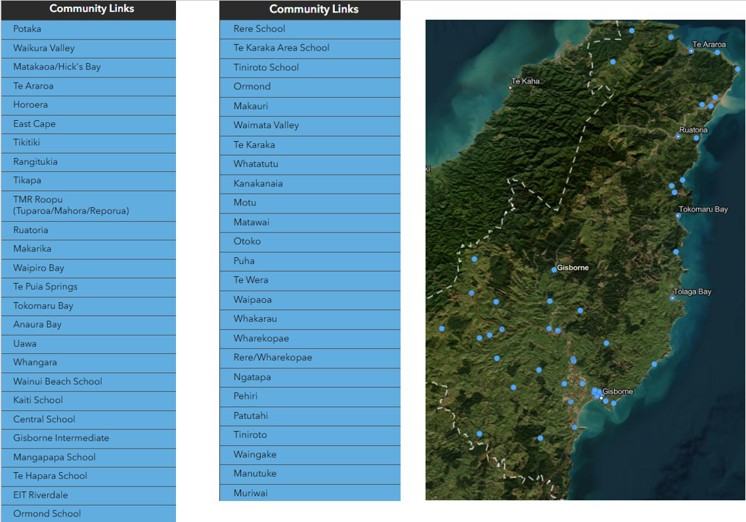
Tairāwhiti 'Community Links' - Local Civil Defence Teams
Tairāwhiti communities have civil defence teams that were developed following Cyclone Bola in 1988 and these are often referred to as 'Community Links'. Across the 42 communities in the region, these civil defence teams connect with Tairawhiti Emergency Management Office (TEMO) as they are critical part of the regional emergency management framework. These groups have a very good knowledge of the community areas and environments, and TEMO connects directly with them both to pass on information and updates and to gather information that they feed back. Hapu groups form part of the framework.
TEMO has actively resourced these groups with communications equipment, emergency shelters, hybrid energy systems, emergency water desalination units and medical equipment. Our regional iwi groups have also contributed to the emergency resources across their iwi areas to support hapu and whanau.